

Views: 0 Author: Site Editor Publish Time: 2026-01-28 Origin: Site


Tammy Schwartz, Senior Director at Guidewire, shared a story. She mentioned that a kitchen extinguisher was used on a car fire, which caused the fire to spread and resulted in significant additional damage.
Fire extinguishers must match the fire type: ABC is suitable for most fires, Class K is designed for kitchens, and Clean Agent is ideal for electronics.
If you spray water on a grease or electrical fire, it can lead to an explosion or electric shock.
Choosing the right specialized fire extinguisher keeps you safe and saves money.
Pick the correct fire extinguisher for each fire type. This helps stop danger and damage.
Check fire extinguishers often to make sure they work well. They must meet safety rules.
Teach your team about fire safety. Show them how to use extinguishers in emergencies.
Learn about special fire risks in places like kitchens and labs. This helps you choose the right extinguisher.
Follow fire safety rules to keep your workplace safe. This also helps you avoid legal problems.

You see different fires in daily life. Each fire class is special and has its own dangers. The table below shows how each fire is different:
Fire Class | Characteristics | Hazards |
|---|---|---|
Class A | Wood, paper, cloth, rubber, plastic, coal | These things catch fire fast and spread flames quickly. |
Class B | Gasoline, oil, diesel, ethanol, acetone, jet fuel | Flammable liquids can make fires explode. |
Class C | Electrical equipment like data centers, solar panels, charging stations | Electrical fires can break equipment and shock people. |
Class D | Metals such as magnesium, titanium, aluminum, lithium | Metal fires are tough to stop and need special tools. |
Class K | Cooking oils and fats | Kitchen fires spread fast and can start again if not handled right. |
You find special fire dangers in places like kitchens, labs, and server rooms. Each place needs a special fire extinguisher for its risks.
Commercial kitchens have dangers from electrical panels, hood filters, and sparks near liquids that burn.
Chemical labs have chemicals that burn and need systems to protect equipment.
Server rooms have important electronics. Water-based extinguishers can break these devices, so you need ones without water.
Tip: Custom fire protection helps you stop fires fast and keeps your equipment safe.
The table below shows which fire system fits each place:
Environment | Fire Suppression System Type | Description |
|---|---|---|
Commercial Kitchen | Wet Chemical Systems | These systems cool and stop kitchen fires with cooking oils. |
Server Rooms | Clean Agent Systems | Gas agents put out fires without water, good for electronics. |
Chemical Labs | CO2 Fire Suppression | Stops fires fast without water, keeps lab equipment safe. |
You need the right fire extinguisher for each place. The table below shows which extinguisher works best:
Fire Extinguisher Type | Suitable For | Limitations |
|---|---|---|
CO₂ (Carbon Dioxide) | Electrical fires | Not good outside because of wind |
Class D Dry Powder | Flammable metal fires | Not for home use |
Wet Chemical | Cooking oils and fats | Not for all fires |
Class C extinguishers protect electrical items.
Class K extinguishers are needed in kitchens for cooking oil fires.
You keep your workplace safe by using the right fire extinguisher for each danger.
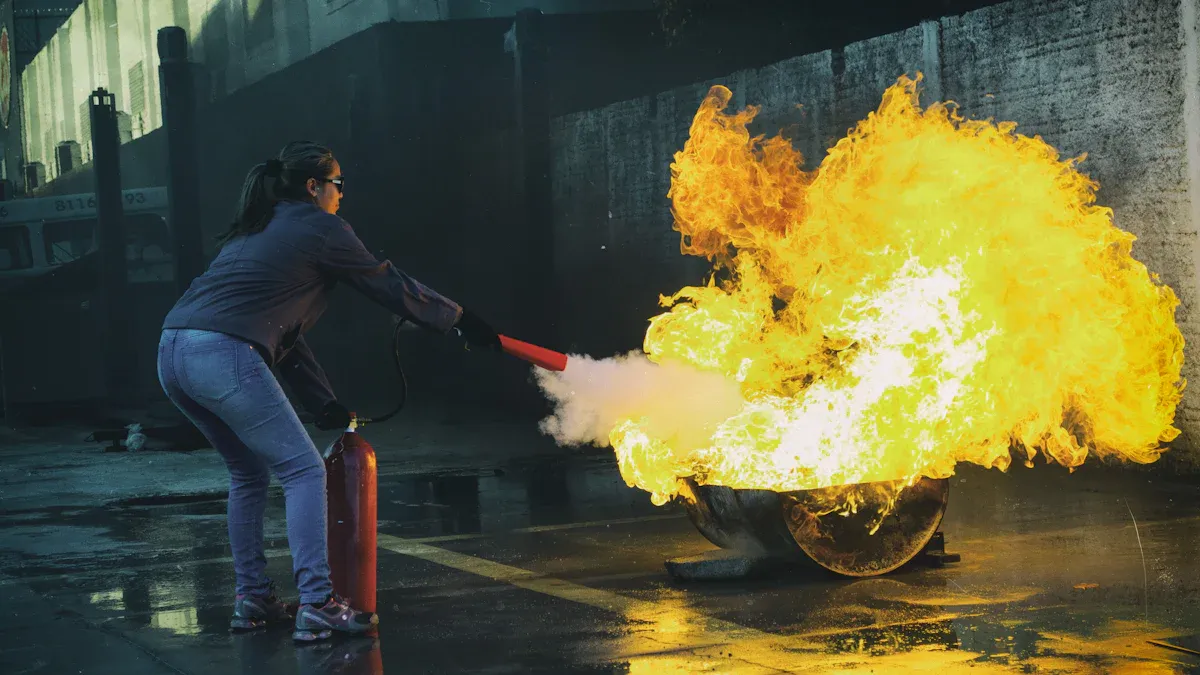
When you use the right fire extinguisher, you stay safe. The right extinguisher is made for the danger in your area. This helps stop explosions or fires from starting again. Many workplaces put the right extinguisher in the right spot. This lowers the chance of harm to people and things.
The right extinguisher stops explosions or fires from coming back.
Each extinguisher has special agents for certain dangers, so it works well.
If you use a water extinguisher on an electrical or grease fire, bad things can happen. The table below shows what might go wrong:
Type of Fire | Consequence |
|---|---|
Electrical Fires | You could get shocked, break equipment, or make a bigger fire. |
Grease Fires | Water can make oil splash and spread the fire. |
Using the wrong extinguisher can make a fire worse. Picking the right one for each danger keeps your workplace safe.
You have to follow fire safety rules at work. Some jobs need special fire extinguishers for certain dangers. There are two main rules for fire extinguisher use:
Standard | Description | Compliance Type |
|---|---|---|
NFPA 10 | Gives advice for using and taking care of fire extinguishers. | Voluntary guidance |
OSHA 1910.157 | Has rules for where to put, use, and check fire extinguishers. | Government-mandated |
Following these rules helps you avoid fines and legal trouble. It also keeps your team and things safe. Some businesses do not follow fire safety rules. Common mistakes include:
Not following local fire rules can mean fines and more danger in emergencies.
Putting extinguishers in the wrong place can slow people down in a fire.
Not teaching workers how to use extinguishers can make them useless in an emergency.
Choosing the right extinguisher and training your team keeps your workplace safe and legal.
You can learn from real stories about using the wrong extinguisher. Some people got hurt or lost things because they used the wrong or broken extinguisher.
In 1994, a couple in Wisconsin lost property when their Kidde extinguisher did not stop a fire from their wood stove.
In 2002, a person in Arkansas lost farm equipment because their Kidde extinguisher did not work.
In 2005, a woman in California was badly hurt when her Kidde extinguisher did not put out a car fire.
Some Kidde extinguishers have exploded and caused injuries and damage.
Picking the right extinguisher and checking it can stop these problems. You keep your family, coworkers, and things safe by using the right extinguisher for each place. For example, use a Class D extinguisher in labs with flammable metals. Use a Class K extinguisher in kitchens with cooking oils. This makes your workplace safer and helps you avoid big mistakes.
Start by checking for fire dangers before picking an extinguisher. This helps you find risks and keep people and things safe. Here are some steps you can follow:
Make a list of people and important equipment that could be in danger. Write down who might get hurt and what needs protection.
Look for things that can start a fire, like heat, fuel, or air. Use a chart to see which dangers are most likely and serious.
Write down what you find and make a plan. List the dangers, what to do, and who will help.
Tip: Work with fire safety experts to check for hidden dangers. They can help you find problems and give good advice.
Think about a few things when picking the right extinguisher. Every place has different fire dangers, so match the extinguisher to the risk. Here are some tips to help you:
Learn about fire classes. Find out what kind of fires could happen, like Class A, B, C, D, or K.
Use ABC extinguishers for most common fires.
Pick a special extinguisher for special dangers. For example, use Class K in kitchens or Class D in labs.
Make sure the extinguisher is not too heavy and can cover the area.
Put extinguishers where people can get them fast.
Think about your budget and safety needs.
Teach your team about fire classes and how to use each extinguisher.
Check and fix extinguishers often.
Factor | Why It Matters |
|---|---|
Fire Class | Matches extinguisher to hazard |
Size and Weight | Ensures portability and coverage |
Placement | Improves accessibility |
Training | Prepares staff for emergencies |
Always check if the extinguisher is certified before you buy it. Certified extinguishers meet safety rules and work well. Look for labels from groups like UL or FM. These labels mean the extinguisher passed tough tests.
Note: Certified extinguishers help you follow fire safety laws and keep your workplace safe.
You keep your place safe by picking the right extinguisher, checking for dangers, and making sure it is certified.
You should check fire extinguishers often to make sure they work. Regular checks keep your workplace safe and help stop accidents. If you skip inspections, you might not know about problems. This can put people and property at risk. Here is an easy schedule you can use:
Look at your extinguishers every month. Check for damage, leaks, or missing parts.
Have a full check once a year. A professional should test and examine the extinguisher.
Do hydrostatic testing as often as the extinguisher type says. This test checks if the cylinder is strong.
Regular checks make sure fire extinguishers work in emergencies. You need to keep checking and refilling them to make sure they work well.
You need to teach your team how to use fire extinguishers. Good training helps everyone feel ready and act fast in an emergency. The table below shows important training steps:
Training Protocol | Description |
|---|---|
Awareness of Fire Hazards | Learn about fire risks and why being ready matters. |
Evacuation Procedures | Know how to leave the building safely if there is a fire. |
Assessing Fire Situations | Decide if it is safe to use an extinguisher. |
Building a Culture of Safety | Remind everyone to care about fire safety. |
PASS Method | Practice Pull, Aim, Squeeze, and Sweep to use an extinguisher. |
Hands-On Practice | Try using extinguishers in a safe place. |
Engaging Presentations | Watch videos and see real examples to learn about fire safety. |
Role-Playing Scenarios | Pretend there is an emergency to practice working together. |
Regular Refresher Training | Go to training often to keep your skills strong. |
Identifying Fire Extinguishers | Learn about each type and what it is for. |
Emergency Protocols | Know when to use an extinguisher and when to leave. |
You need to refill or replace fire extinguishers so they are always ready. Here are some important rules:
Refill extinguishers after you use them, even for a short time.
Check often for low pressure or broken parts.
Replace extinguishers that are old, broken, or have bad pressure gauges.
Throw away disposable extinguishers after 12 years.
Rechargeable extinguishers need new charge every 6 years.
Take out old extinguishers if rules change or they are not safe anymore.
If you do not recharge or replace extinguishers, they might not work. Following these rules keeps your workplace safe and follows the law.
You keep your workplace safe by picking the right fire extinguisher for each danger. If you use the wrong one, people can get hurt or things can break. Checking extinguishers often helps lower insurance costs and follows safety rules.
Some people think all extinguishers work the same way, but each one is made for a certain kind of fire.
You need to look for fire dangers, teach your team, and plan regular checks.
Halotron extinguishers help protect important equipment and last longer if you take care of them.
OSHA and Firehouse Co. give advice on how to choose and care for extinguishers.
Plan to check extinguishers often.
Look for possible fire dangers.
Make a plan to keep extinguishers working.
You can make the fire worse or cause injury. Water on grease fires spreads flames. Using the wrong extinguisher on electrical fires can shock you.
You should check extinguishers every month. A professional should inspect them once a year. Regular checks help you find problems early.
Fire Type | Extinguisher Needed |
|---|---|
Cooking oils and fats | Class K |
Class K extinguishers stop kitchen fires fast. You protect your kitchen by using the right extinguisher.
You cannot use one extinguisher for every fire. Each fire needs a special extinguisher. ABC extinguishers work for most fires, but you need Class K or D for special hazards.


