Views: 0 Author: Site Editor Publish Time: 2026-02-26 Origin: Site


Oxygen cylinders are essential for patients who rely on supplemental oxygen, but many wonder how long an oxygen cylinder lasts in daily use. Knowing cylinder duration helps plan activities, manage therapy, and avoid running out unexpectedly. Factors like tank size, flow rate, patient breathing, and conserving devices all play a role. In this guide, we’ll explore cylinder lifespan, compare portable and stationary oxygen solutions, and provide practical tips to maximize oxygen supply, ensuring you stay prepared at home or on the go.
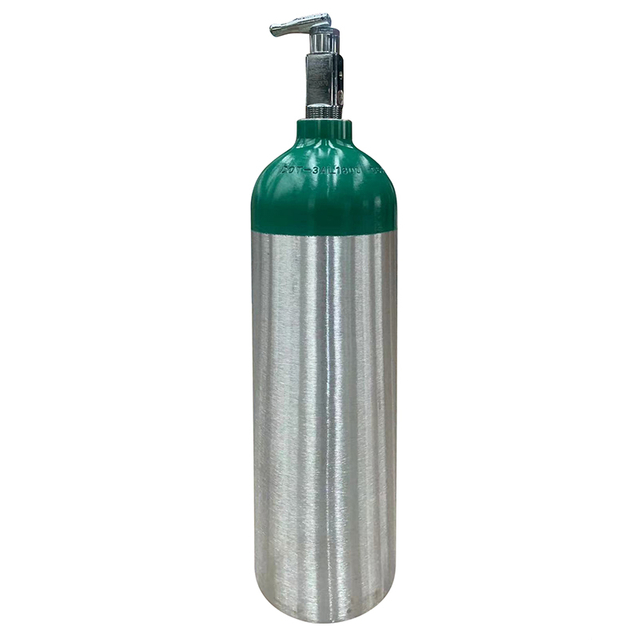
Oxygen cylinders come in several sizes, like D, E, H, and K, each holding different amounts of oxygen.
D cylinders: roughly 425 liters
E cylinders: around 680 liters
H/K cylinders: up to 7,800 liters
Larger cylinders contain more oxygen, so they last longer at the same flow rate. For example, an E cylinder running at 2 L/min can last about 5–6 hours, while a D cylinder might only last 3–4 hours.
| Cylinder Size | Approx. Capacity (L) | Example Duration at 2 L/min |
|---|---|---|
| D | 425 | 3–4 hours |
| E | 680 | 5–6 hours |
| H | 7,800 | 65–70 hours |
The oxygen flow rate strongly affects cylinder life. Faster flow = quicker oxygen use.
1–2 L/min: longest cylinder duration
4–6 L/min: halves runtime
15 L/min or higher: short periods, often used in hospitals
Continuous flow delivers oxygen steadily, while pulse dose only gives oxygen during inhalation. Pulse dose can double or triple cylinder duration, depending on the device and breathing pattern.
How someone breathes affects oxygen consumption a lot.
Continuous vs intermittent use: Tanks last longer if used only when needed.
Breathing depth and rate: Fast or deep breaths use oxygen faster.
Daily activities: Exercise or chores shorten cylinder life. Even sleep can change consumption based on breathing patterns.
It’s important to notice patterns to estimate how long a cylinder will last accurately.
Pulse dose regulators and oxygen-conserving devices can extend cylinder duration.
They release oxygen only when inhaled, avoiding waste.
Devices can sometimes double runtime, making portable cylinders last longer.
Not all patients benefit: mouth breathers or irregular breathers may not get enough oxygen.
Using them requires guidance from a healthcare professional to ensure safety.
External conditions and equipment condition affect oxygen efficiency.
Temperature and altitude: Cold or hot climates and high elevations change cylinder pressure and oxygen delivery.
Storage: Keep cylinders upright, away from heat or flames.
Equipment maintenance: Leaks in tubing, faulty regulators, or clogged cannulas reduce oxygen supply and shorten duration.
Regular checks and proper storage help make the cylinder last as expected.
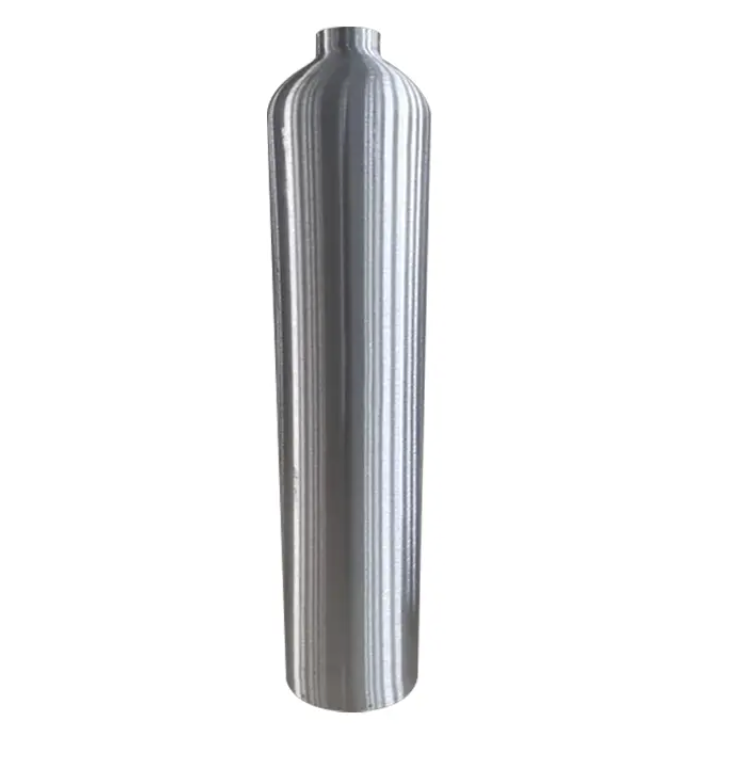
To estimate how long a cylinder will last, we use a simple formula:
[
\text{Duration (minutes)} = \frac{(\text{Tank Pressure (psi)} - \text{Residual Pressure}) \times \text{Cylinder Constant}}{\text{Flow Rate (L/min)}}
]
It considers tank pressure, a residual safety margin, the cylinder’s size constant, and the flow rate. Using it helps plan oxygen use for travel or daily activities.
Follow these steps to calculate your cylinder’s runtime:
Cylinder Pressure – Read the gauge. Subtract residual pressure, usually around 200 psi.
Cylinder Constant – Pick constant based on cylinder size:
D = 0.16
E = 0.28
M = 1.56
G = 2.41
H/K = 3.14
Flow Rate – Use your prescribed oxygen rate in L/min.
Apply Formula – Multiply usable pressure by cylinder constant, divide by flow rate.
Example: D cylinder at 15 L/min, pressure 2000 psi:
Usable pressure = 2000 – 200 = 1800 psi
Cylinder constant = 0.16
Flow rate = 15 L/min
[
\text{Duration} = \frac{1800 \times 0.16}{15} = 19.2\ \text{minutes}
]
It will last roughly 19 minutes at 15 L/min continuous flow.
Here’s a handy table for common cylinders at different flow rates. Numbers are approximate, actual runtime may vary.
| Cylinder Size | Flow Rate (L/min) | Estimated Duration (min) |
|---|---|---|
| D | 1 | 270 |
| D | 2 | 135 |
| D | 4 | 68 |
| E | 1 | 475 |
| E | 2 | 238 |
| E | 4 | 119 |
| M | 1 | 2,800 |
| M | 5 | 560 |
| H | 2 | 7,800 |
| H | 4 | 3,900 |
Tip: For pulse dose delivery, cylinders often last 2–3 times longer, depending on breathing pattern and regulator settings.
Home oxygen concentrators are built for daily long-term use. Most last about 5 years or 15,000–30,000 hours of operation.
They run continuously as long as electric power is available.
No refills needed, unlike oxygen cylinders.
Ideal for overnight or home use, especially for patients needing consistent oxygen flow.
Maintenance includes filter cleaning and checking power supplies regularly.
POCs are designed for mobility. They filter oxygen from air and store it in batteries, often using pulse dose delivery.
Battery life depends on flow rate, pulse vs continuous mode, and battery condition.
At 2 L/min pulse dose, many units can last 8–16 hours on a full battery.
Some models allow double batteries or external packs for extended use.
Lightweight design makes them ideal for travel, errands, and daily activities outside the home.
Here’s a quick comparison between oxygen cylinders and concentrators:
| Feature | Oxygen Cylinder | Oxygen Concentrator |
|---|---|---|
| Oxygen Supply | Limited, finite amount | Unlimited if powered |
| Runtime | Flow-dependent | Continuous |
| Refills Needed | Yes | No |
| Portability | Moderate, heavier | Stationary: fixed, POC: light |
| Best Use | Short trips, backup | Home or long-term therapy |
Cylinders are still useful as backup oxygen or for travel, especially if power isn’t available.
Concentrators provide greater reliability for daily therapy and reduce the need to calculate or track cylinder duration.
Always follow your clinician’s prescription for flow rate.
Higher than needed flow wastes oxygen.
Lower flow than prescribed may reduce therapy effectiveness.
Use the lowest effective flow to extend cylinder life.
Pulse dose regulators or other conserving devices can significantly stretch runtime.
Deliver oxygen only during inhalation, reducing waste.
Ideal for portable cylinders, especially during travel or activities.
Not suitable for everyone; check with your healthcare provider.
How you store and maintain cylinders affects efficiency.
Store upright in a ventilated area, away from heat or flames.
Keep regulators, tubing, and gauges in good condition.
Check for leaks, kinks, or worn connections before use.
Avoid temperature extremes; pressure changes can affect delivery.
Understanding your equipment improves safety and duration.
Learn to read pressure gauges and calculate remaining oxygen.
Recognize low oxygen warnings early.
Follow fire safety rules: no smoking or open flames near cylinders.
Educate family or caregivers about safe handling and emergency steps.
A: A D cylinder lasts approximately 3–4 hours at 2 L/min continuous flow, depending on pressure and patient breathing patterns.
A: No. Pulse dose regulators work best for patients breathing through the nose with regular patterns. Mouth breathers or irregular breathing may not get sufficient oxygen.
A: Continuous flow provides steady oxygen, while pulse dose delivers oxygen only during inhalation, extending cylinder duration.
A: Temperature, altitude, and storage affect pressure and flow efficiency. Extreme heat, cold, or high altitude can shorten cylinder life.
Understanding the factors that affect oxygen cylinder duration gives you more control over therapy and daily routines. By monitoring flow rates, using conserving devices, and maintaining equipment, you can stretch each cylinder’s life effectively.
At Shaoxing Ruiying High Pressure Vessel Co., Ltd., we offer reliable, high-quality oxygen cylinders built for safety and performance. Whether for home use or travel, our products help ensure patients get consistent oxygen supply, giving peace of mind to both users and caregivers.