

Views: 0 Author: Site Editor Publish Time: 2026-10-29 Origin: Site


Choosing between a Type 3 and Type 4 cylinder requires more than comparing weight. The liner material affects gas containment, thermal behavior, structural design, and inspection requirements. The right choice depends on the stored gas, working pressure, operating environment, applicable standards, and total system requirements.
Type 3 and Type 4 cylinders both use composite overwraps to provide strength while reducing weight compared with traditional all-metal designs. Their main difference is the liner: Type 3 cylinders use a metal liner, usually aluminum, while Type 4 cylinders use a non-metallic polymer liner.
This guide explains the differences between Type 3 and Type 4 cylinders and outlines the factors engineers and purchasing teams should evaluate before selecting a high-pressure gas cylinder.
Table of Contents

Type 3 and Type 4 cylinders are fully wrapped composite pressure vessels. Their composite layers provide most of the strength needed to contain internal pressure.
The liner helps contain the gas and supports the cylinder's overall design. However, the liner materials behave differently under pressure, temperature changes, and repeated filling cycles.
A Type 3 cylinder has a metal liner, commonly aluminum, fully wrapped with composite material such as carbon fiber reinforced polymer. The liner provides a gas barrier and contributes to the vessel's overall mechanical behavior. The composite overwrap carries most of the pressure load.
Aluminum has relatively high thermal conductivity compared with polymer liners. This can help transfer heat during filling, although actual temperature changes depend on the gas, filling rate, cylinder design, and filling system.
Type 3 cylinders can be suitable for applications that require a lightweight pressure vessel with a metal liner. Buyers should check the specific cylinder's rated gas, working pressure, certification, and inspection requirements.
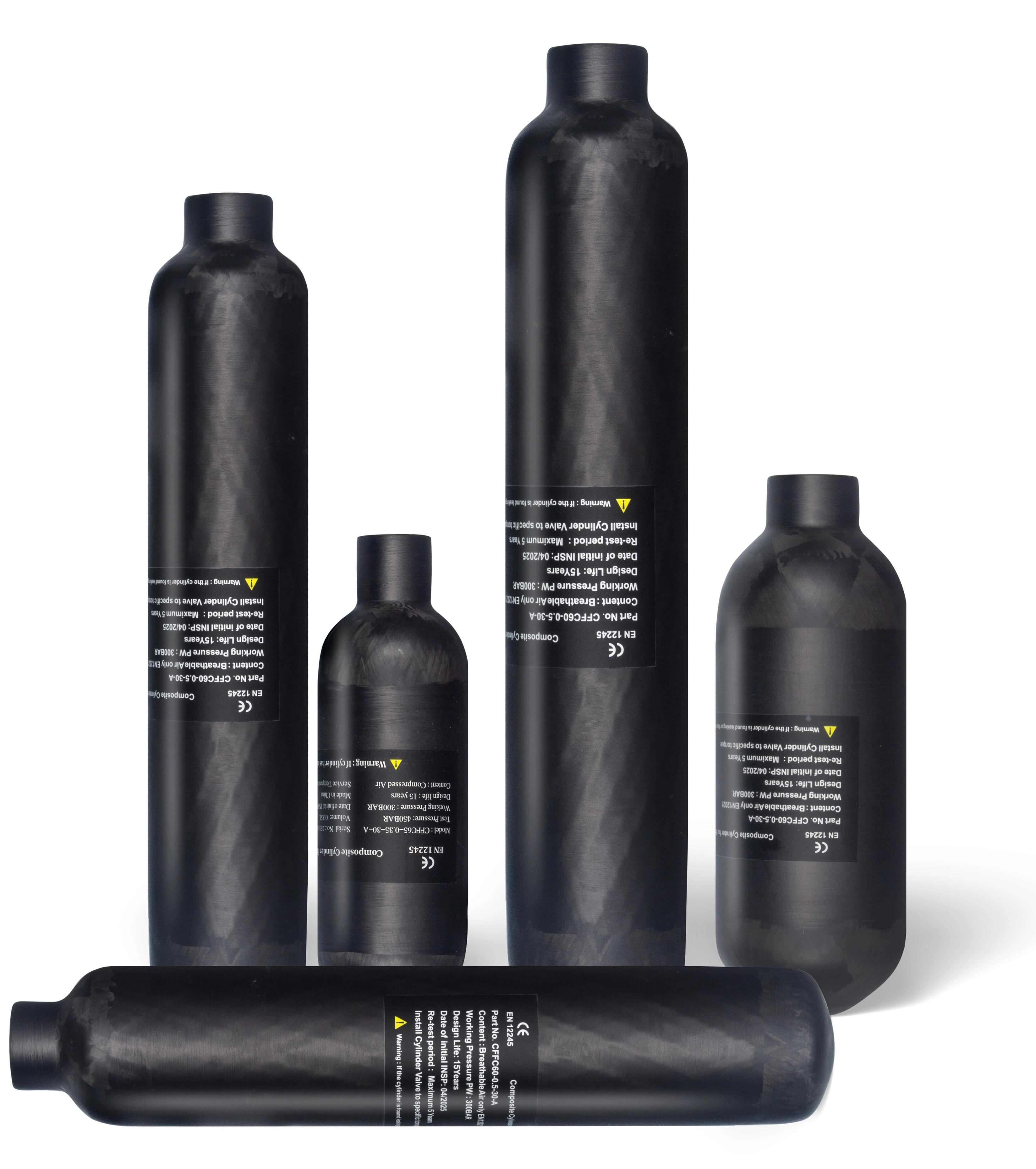
A Type 4 cylinder uses a non-metallic liner, typically made from a qualified polymer, with a composite overwrap around it. The liner serves primarily as a gas barrier, while the composite structure is designed to carry the pressure load.
Removing the metal liner can reduce cylinder weight. This can be useful in mobile equipment and other applications where reducing system mass is important.
However, polymer liners have different gas-permeation and thermal properties from aluminum. The liner material, sealing system, operating temperature range, and gas compatibility must be validated for the intended application.
The table below summarizes the main design differences. Actual performance depends on the model, capacity, pressure rating, materials, and applicable approval.
Comparison factor | Type 3 cylinder | Type 4 cylinder |
|---|---|---|
Liner material | Usually aluminum | Non-metallic polymer |
Composite overwrap | Provides most pressure-bearing strength | Designed to carry the pressure load |
Weight | Includes a metal liner | Can reduce weight by removing the metal liner |
Thermal conductivity of liner | Relatively high | Generally lower |
Gas permeation | Metal liner provides a strong gas barrier | Depends on polymer, gas, liner thickness, and design |
Fatigue behavior | Metal liner and composite structure must be evaluated | Composite structure, liner, and interfaces must be evaluated |
Inspection and service | Follow the cylinder's approval and applicable regulations | Follow the cylinder's approval and applicable regulations |
Best selection method | Match the metal-lined design to the operating requirements | Match the polymer-lined design to the operating requirements |
Weight is often a major reason to evaluate composite cylinders. In vehicles, drones, and portable equipment, a lighter cylinder may increase payload capacity or reduce the total weight of the system.
Type 4 cylinders remove the metal liner, which can provide a weight advantage. However, the actual difference between Type 3 and Type 4 cylinders depends on their dimensions, water capacity, working pressure, composite design, fittings, and protective components.
For a meaningful comparison, request product data for cylinders with the same capacity, rated working pressure, intended gas, and applicable approval. Compare the complete assembly where possible, including the valve and protective components.
Do not use a general weight-saving percentage as a substitute for model-specific data.
Neither cylinder type automatically supports a higher working pressure than the other. The rated working pressure is established by the cylinder's design, manufacturing process, testing, and approval.
Before choosing a cylinder, confirm:
The intended gas and its compatibility with the liner, valve, seals, and other wetted materials.
The rated working pressure and required test pressure.
The applicable design standard and certification.
The approved temperature range and filling conditions.
The cylinder's traceability, markings, and documentation.
Hydrogen storage requires particular attention to gas compatibility, permeation, sealing, and qualified service conditions. A cylinder should only be used for hydrogen when its design and approval specifically cover the intended application.
Filling a high-pressure cylinder generates heat as the gas is compressed. Cylinder temperature depends on several factors, including the gas, initial temperature, filling rate, pressure, cylinder geometry, and filling equipment.
An aluminum liner generally transfers heat more readily than a polymer liner. This can influence how heat moves through a Type 3 cylinder during filling. A Type 4 cylinder's polymer liner has lower thermal conductivity, but the temperature behavior of the complete cylinder still depends on the overall design and filling process.
Neither cylinder type should be assumed to support unrestricted fast filling. Operators must follow the manufacturer's approved filling procedures and temperature limits. Where required, the filling system may need flow control, temperature monitoring, or gas pre-cooling.
Both Type 3 and Type 4 cylinders must withstand their specified pressure cycles and operating environments. Their long-term performance depends on design quality, manufacturing consistency, handling, maintenance, and the conditions in which they are used.
For Type 3 cylinders, inspection and qualification must account for the metal liner, composite overwrap, and their interaction. For Type 4 cylinders, attention also needs to be paid to the polymer liner, the valve boss interface, seals, and the composite structure.
Impact damage, deep abrasion, chemical exposure, heat, and operation outside approved limits can affect cylinder integrity. Visual inspection alone may not identify every type of internal or structural damage.
Follow the cylinder's markings, manufacturer instructions, and applicable local regulations for inspection, testing, repair, and retirement. Do not assume that all cylinders have the same test interval or service life.
Weight can be especially important for drones and portable pneumatic equipment. Type 3 composite cylinders already offer a lightweight alternative to all-metal cylinders. Type 4 designs may provide further weight reduction, provided they meet the gas, pressure, temperature, and approval requirements of the application.
Compare complete system weight, operating duration, pressure needs, and available space before making a decision.
Hydrogen storage requires careful evaluation of pressure rating, permeation, sealing, material compatibility, and applicable regulations. Type 3 and Type 4 designs should only be considered when specifically qualified for the intended hydrogen service.
The correct choice also depends on the vehicle or equipment design, filling infrastructure, operating temperature, and inspection requirements.
For breathing-air systems and emergency equipment, product approval, reliability, handling requirements, and maintenance procedures are essential. Do not select a cylinder based on weight or liner material alone.
Confirm that the complete cylinder assembly is approved for the intended breathing-air application and complies with the relevant standards and regulations.
Industrial applications vary widely in gas chemistry, pressure, operating temperature, and filling frequency. The liner and valve materials must be compatible with the specific gas and operating conditions.
Purchasing teams should provide the gas type, required capacity, working pressure, environment, and applicable market requirements when requesting a quotation.
Use the following checklist when evaluating suppliers:
Gas and application: Confirm the intended gas and end use.
Pressure and capacity: Specify working pressure, required water capacity, and installation limits.
Operating conditions: Define temperature range, filling rate, pressure cycles, and environmental exposure.
Approval and compliance: Request the applicable certificates, markings, and technical documents for the target market.
Inspection and service life: Confirm the manufacturer's inspection, testing, maintenance, and retirement requirements.
Total system cost: Compare purchase price, complete assembly weight, filling requirements, maintenance, and replacement needs.
Supplier capability: Review production quality controls, traceability, testing capability, and technical support.
For customized projects, share the application details and technical requirements with the manufacturer before finalizing the cylinder design.
The main difference between a Type 3 and Type 4 cylinder is the liner material. Type 3 cylinders generally use an aluminum liner, while Type 4 cylinders use a polymer liner and may offer a weight advantage.
However, neither design is automatically better for every application. Gas compatibility, pressure rating, filling conditions, certification, inspection requirements, and total system performance should guide the decision.
Evaluate the complete cylinder assembly against your actual operating conditions, and request model-specific documentation before purchasing.
A Type 3 cylinder typically uses an aluminum liner with a full composite overwrap. A Type 4 cylinder uses a non-metallic polymer liner with a composite overwrap. The liner material affects weight, thermal behavior, and gas permeation.
A Type 4 cylinder can be lighter because it does not use a metal liner. The actual weight difference depends on capacity, working pressure, design, fittings, and approval requirements.
They may be suitable when specifically designed, tested, and approved for the intended hydrogen application. Buyers should verify pressure rating, permeation performance, material compatibility, and applicable regulatory requirements.
Not in every situation. An aluminum liner transfers heat more readily than a polymer liner, but safe filling rates depend on the cylinder design, gas, initial temperature, filling system, and manufacturer instructions.
There is no single service life that applies to every cylinder. Service life, inspection intervals, and retirement criteria depend on the design, approval, operating conditions, and applicable regulations. Always follow the manufacturer's instructions and the cylinder's certification requirements.

