

Views: 0 Author: Site Editor Publish Time: 2026-10-13 Origin: Site


A carbon fiber wrapped cylinder is a composite pressure vessel designed to store compressed gas while reducing weight compared with some all-metal cylinder designs. It combines an inner liner with a carbon fiber composite overwrap to meet specific pressure, capacity, and handling requirements.
These cylinders are used in selected applications where weight reduction and high-pressure storage are important. However, performance depends on the cylinder's design, liner material, working pressure, gas compatibility, and applicable certification.
This guide explains how carbon fiber wrapped cylinders work, compares Type III and Type IV designs, and outlines key factors for safe selection and use.
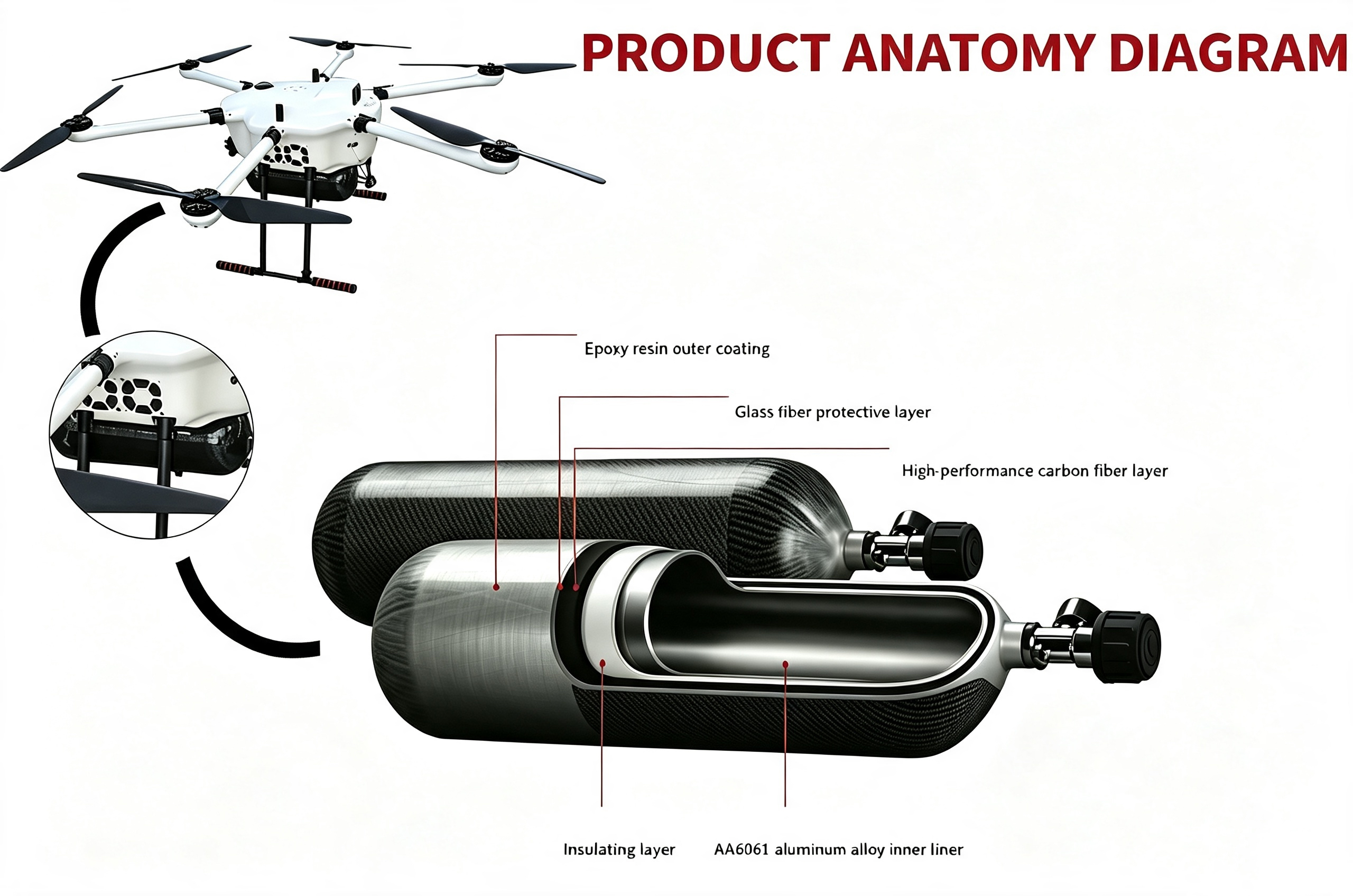
A carbon fiber wrapped cylinder is a pressure vessel that uses carbon fiber composite material as part of its load-bearing structure. Carbon fibers are combined with a resin matrix and wound around an inner liner to create the required structural design.
The liner provides a gas barrier and supports the manufacturing process. Depending on the cylinder type, the liner may be made from metal or polymer. The composite overwrap provides much of the structural strength needed to contain internal pressure.
A finished cylinder may also include protective coatings, end protection, a valve, and other accessories. These components vary by model and application.
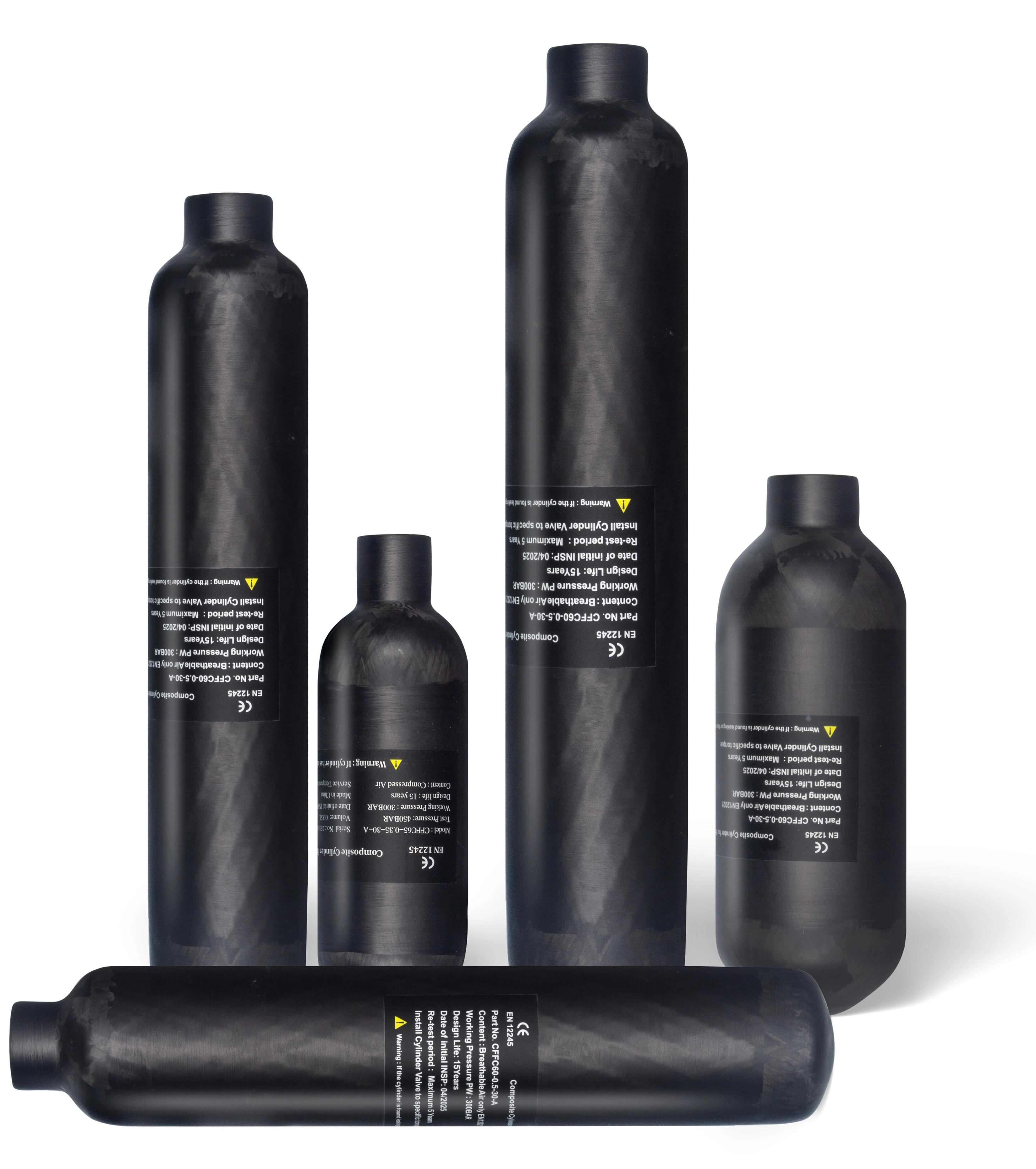
Ruiying manufactures Type III carbon fiber cylinders for selected applications, including portable outdoor pneumatic devices. See its outdoor sports cylinder range for model-specific specifications.
A carbon fiber wrapped cylinder uses a combination of liner and composite reinforcement to contain pressurized gas.
The liner helps prevent gas from passing through the cylinder wall. In a Type III cylinder, the liner is typically metal, such as aluminum. In a Type IV design, the liner is generally polymer-based.
Liner material affects weight, gas compatibility, permeability, manufacturing, and other performance characteristics. The correct design depends on the gas being stored and the intended operating conditions.
During manufacturing, carbon fibers are wound around the liner in controlled patterns and combined with a resin matrix. The winding design helps the composite structure resist the stresses created by internal pressure.
The fiber orientation, material properties, winding process, and curing conditions all affect the final cylinder's performance. These manufacturing variables must be controlled and validated for the specific design.
The resin binds the fibers into a composite structure and helps transfer loads between them. The finished vessel depends on the combined performance of the fibers, resin, liner, and overall design.
Protective coatings or other external layers may also be used, depending on the cylinder design. They can help protect the surface, but they do not make the cylinder immune to impact, abrasion, heat, or chemical exposure.
Type III and Type IV cylinders are both fully wrapped composite cylinder designs. Their main difference is the inner liner material.
Feature | Type III Cylinder | Type IV Cylinder |
|---|---|---|
Inner liner | Metal, commonly aluminum | Non-metallic liner, commonly polymer |
Composite overwrap | Fully wrapped composite structure | Fully wrapped composite structure |
Weight | Can be substantially lighter than comparable all-metal designs | Designed to reduce weight, depending on the model |
Internal corrosion | Depends on the liner material and gas compatibility | Polymer liners do not undergo metal corrosion |
Gas permeability | Depends on liner integrity and design | Requires evaluation for the specific gas and liner |
Thermal behavior | Depends on the complete cylinder design | Depends on the complete cylinder design |
Selection factors | Pressure, weight, gas compatibility, approval, and service requirements | Pressure, weight, gas compatibility, permeability, approval, and service requirements |
Neither type is automatically better for every application. Buyers should compare approved models based on the required gas, operating pressure, temperature range, filling conditions, and intended service.
A Type III cylinder uses a metal liner, which can provide different thermal and mechanical characteristics from a polymer-lined design. However, liner material alone does not determine the permitted filling rate or overall safety.
A Type IV cylinder uses a non-metallic liner and may offer further weight-reduction opportunities. Its suitability depends on gas compatibility, permeability limits, temperature requirements, structural design, and approval for the intended use.
For additional background, read Ruiying's article on the four types of gas cylinders.
Lower weight
Carbon fiber composite construction can reduce cylinder weight compared with certain all-metal designs of comparable capacity and pressure rating. The actual reduction varies by model and must be verified using product specifications.
High-pressure storage
Composite cylinders can be designed for high-pressure applications. However, the approved working pressure is specific to each cylinder and cannot be determined from the material alone.
Application flexibility
Different cylinder designs can serve selected portable, industrial, breathing-air, and other gas-storage applications. Each use requires confirmation of gas compatibility, approval, and operating requirements.
Potential handling benefits
Reducing cylinder weight may make handling and transportation easier. In mobile equipment or weight-sensitive systems, it may also help manage overall payload.
Sensitivity to certain types of damage
Impact, deep abrasion, cuts, or other damage can compromise the composite overwrap. A cylinder may have structural damage even when the full extent is not visible from the surface.
Design-specific gas and temperature limits
The liner, composite materials, valve, and seals must be compatible with the gas and operating conditions. Fast filling, extreme temperatures, or unsuitable gases may create additional risks if the cylinder is not approved for those conditions.
Inspection and replacement requirements
Composite cylinders have specific inspection, testing, and service-life requirements. They should not be treated as maintenance-free equipment.
Higher manufacturing complexity
Carbon fiber composite cylinders require controlled material processing, winding, curing, and quality testing. Purchase price and lifecycle cost depend on the model, production requirements, inspection rules, and intended use.
Safe operation depends on selecting an approved cylinder and following its instructions throughout its service life.
There is no single service-life limit that applies to every carbon fiber wrapped cylinder worldwide. The permitted service life depends on the cylinder design, applicable approval, markings, manufacturer instructions, and local regulations.
Before purchasing, confirm the manufacture date, service-life limit if applicable, inspection requirements, and replacement rules for the specific model.
Hydrostatic testing and visual inspection intervals vary according to cylinder type, applicable regulations, approval documents, and intended use. Do not assume that all composite cylinders require testing on the same schedule.
Keep inspection records and follow the manufacturer's instructions. Only qualified personnel and approved procedures should be used for required inspections and tests.
Use appropriate handling methods and protective equipment where specified. Avoid dropping, striking, dragging, or exposing cylinders to unapproved temperatures and chemicals.
Do not attempt to repair structural damage to a composite overwrap yourself. If a cylinder has been dropped, involved in an impact, or shows cuts, exposed fibers, bulging, or other suspicious damage, remove it from service and seek an assessment from qualified personnel.
Before procurement, verify the markings and documentation required for the destination market. DOT, TC, ISO, UN, and other regulatory or technical references are not interchangeable approvals; the applicable requirements depend on the cylinder and its intended use.
Ask the supplier for the relevant technical specifications, approval documents, inspection instructions, and traceability records.

Ruiying's OEM high-pressure cylinder service provides information about customization, testing capabilities, and production traceability. Confirm the exact documentation and approvals available for the cylinder model and target market.
Before choosing a cylinder, define the technical and regulatory requirements for the application.
Specify the gas to be stored and confirm compatibility with the liner, composite materials, valve, and seals. Gas permeability and material compatibility may be especially important for certain gases.
Define the required working pressure, water capacity, gas supply, and system connection. Verify all ratings against the exact model's documentation.
Consider whether the cylinder will be carried by personnel, mounted on equipment, transported frequently, or used in a fixed installation. Also assess the operating temperature, filling conditions, and exposure to impact or chemicals.
Confirm that the cylinder is approved for the intended application and destination market. Review the required inspection intervals, service-life limits, handling instructions, and documentation.
For OEM or customized projects, discuss the required dimensions, pressure rating, capacity, valve, finish, quantity, and destination market with the manufacturer. Request technical documentation and confirmation of the relevant approvals before finalizing the specification.
Ruiying's OEM cylinder solutions provide a starting point for discussing customized requirements.
A carbon fiber wrapped cylinder combines an inner liner with a composite overwrap to store compressed gas while managing weight and structural requirements. Type III and Type IV designs differ mainly in their liner materials, but the best option depends on more than liner type alone.
Before selecting a cylinder, compare its approved working pressure, capacity, gas compatibility, operating conditions, inspection requirements, service life, and certification. Never assume that all composite cylinders share the same pressure ratings, lifetime, or maintenance schedule.
For a project-specific recommendation, provide the gas type, required pressure, capacity, operating environment, destination market, and intended application to the manufacturer.
It is a composite pressure vessel that uses an inner liner and a carbon fiber composite overwrap to store compressed gas. The exact structure and performance depend on the cylinder type and model.
Type III cylinders use a metal liner, commonly aluminum, while Type IV cylinders use a non-metallic liner, commonly polymer. Their suitability depends on gas compatibility, pressure, temperature, weight, and applicable approval.
The weight reduction varies by cylinder capacity, pressure rating, design, and comparison model. Buyers should compare the actual product specifications rather than rely on a universal percentage.
Service life depends on the cylinder's design, markings, applicable regulations, approval, and manufacturer instructions. Confirm the requirements for the exact model and market.
Do not attempt to repair a damaged composite overwrap yourself. Remove the cylinder from service and have it assessed according to the manufacturer's instructions and applicable requirements.

