

Views: 0 Author: Site Editor Publish Time: 2026-02-13 Origin: Site


Multipurpose ABC extinguishers are good for most home fires.
Class K extinguishers are best for kitchen grease fires.
You can choose the right one if you follow easy steps.
Pick a multipurpose ABC fire extinguisher for most home fires. It works on normal things, flammable liquids, and electrical fires.
Put fire extinguishers in important spots like the kitchen, garage, and by exits. This helps you reach them fast in an emergency.
Check your fire extinguisher every month for damage and pressure. Doing this often makes sure it will work when needed.
Learn about fire classes (A, B, C) to pick the right extinguisher for each fire risk at home.
Find the UL certification on fire extinguishers. This shows the product is safe and will work well.
Picking the right fire extinguisher helps keep your family safe. Fires can start fast and spread quickly. The right tool can stop a small fire from getting big. Many people in America have a fire extinguisher. But not everyone knows how important it is to pick the right one. Using the right extinguisher can help prevent injuries and damage to your home.
Here is how fire safety affects homes in the United States:
Statistic | Impact |
|---|---|
70% of Americans own or have access to a fire extinguisher | Shows many people are ready for fire emergencies |
Thousands of deaths and billions in property damage from residential fires annually | Shows why you need good fire safety tools |
If you use the wrong extinguisher, the fire can get worse. Some people have been hurt or lost their homes because they did not have the right tool. Always remember to use the PASS method: Pull, Aim, Squeeze, Sweep.
The right fire extinguisher can help stop fire damage.
Multipurpose dry chemical extinguishers are good for most homes.
Good fire safety tools help keep people safe.
Fires can start in different places in your house. Each room has its own dangers. Most fires start in the kitchen because of cooking. Bedrooms can catch fire from things that burn easily or from electrical problems. Living rooms and basements can have fires from bad wiring. Laundry rooms can be risky if dryer lint builds up.
Here are the top reasons for home fires in 2025:
Cause of Fire | Percentage of Incidents | Fatalities Percentage |
|---|---|---|
Cooking Equipment | 49% | N/A |
Heating Devices | 13% | N/A |
Electrical Malfunctions | 9% | N/A |
Smoking Materials | 5% | 24% |
Candles | 2% | N/A |
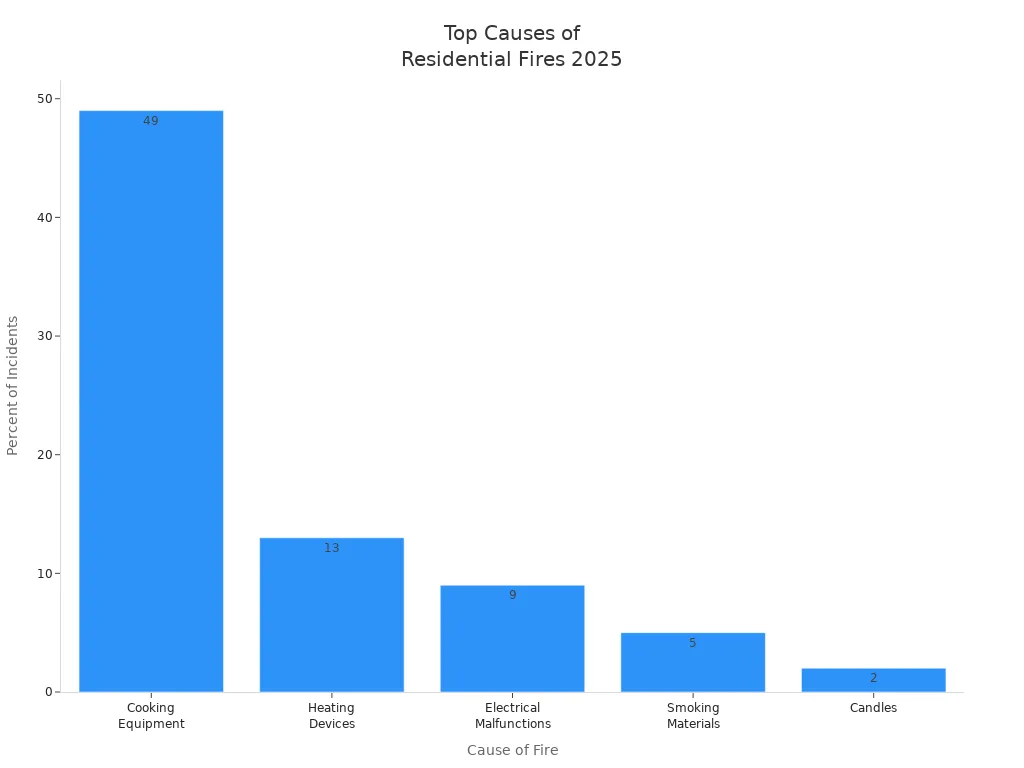
You should know where fires might start in your home. This helps you put your fire extinguisher in the best place and be ready.
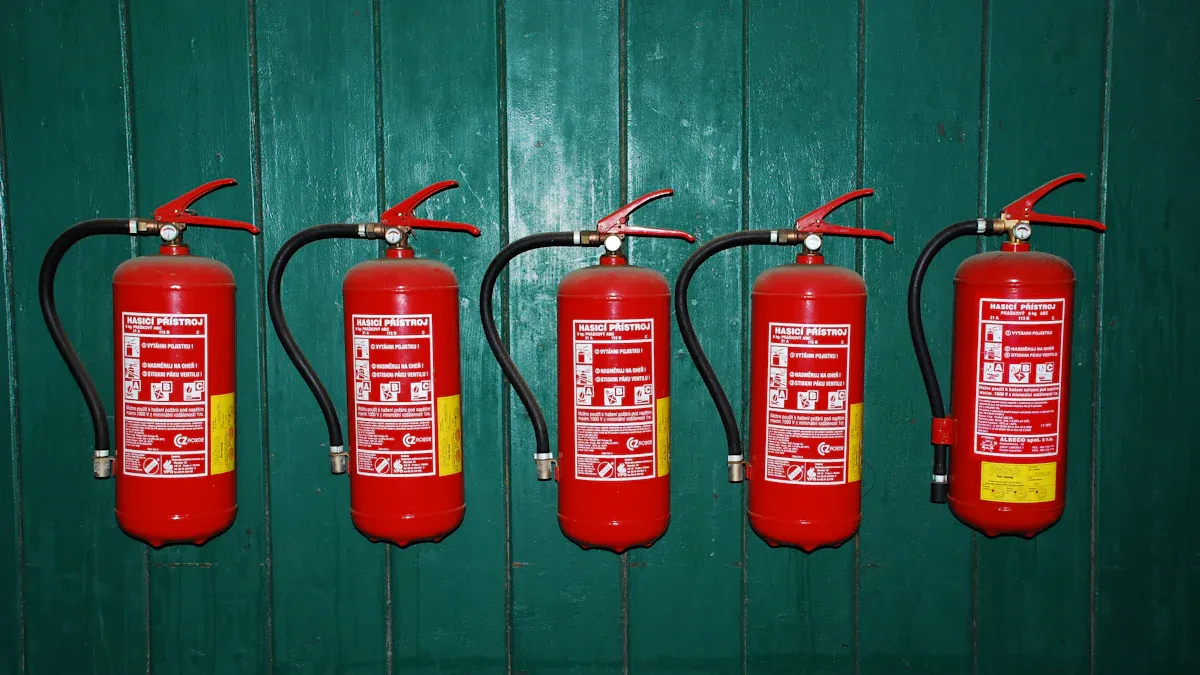
You need to know the different fire classes before you choose a fire extinguisher. Each class matches a certain type of fire. Using the wrong type can make a fire worse or even put you in danger. The table below shows the main differences between fire classes:
Fire Class | Materials Involved | Extinguisher Effectiveness |
|---|---|---|
A | Paper, wood, cloth | Works only on ordinary combustibles; not for liquid or electrical fires |
B | Liquids and gases (oil, gas) | Works on flammable liquids; not for cooking oils or grease |
C | Active electrical devices | Use only after turning off the power; safe for electrical fires |
You will find that each room in your home has different fire risks. Kitchens often have grease and oil, so you need a fire extinguisher that can handle those fires. Garages and workshops have flammable liquids and tools, so you need a higher-rated ABC extinguisher there. Living rooms and bedrooms usually have paper, fabric, or electronics, so an A or ABC extinguisher works best.
Tip: Always check the label on your fire extinguisher. The letter and number show what type of fire it can put out and how strong it is. A higher number means more power.
You can make your home safer by choosing a multi-purpose ABC fire extinguisher. This type works on Class A, B, and C fires. You do not need to buy a different extinguisher for each room. ABC extinguishers use a dry chemical that puts out most home fires quickly.
Here are some reasons why ABC extinguishers are a smart choice for your home:
ABC fire extinguishers protect against many types of fires, so you get complete safety.
You can use one extinguisher in almost any room, which makes things simple.
They are easy to use and quick to activate, so you can stop a fire before it spreads.
The dry chemical is safe to clean up, so you do not have to worry about extra mess.
With good care, an ABC extinguisher can last up to 15 years.
You should still think about special needs in some rooms. Kitchens may need a Class K extinguisher for cooking oils and fats. Garages need a strong ABC extinguisher because of flammable liquids and tools.
Note: Make sure everyone in your home knows how to use the fire extinguisher. Practice using the PASS method: Pull, Aim, Squeeze, Sweep.
Choosing the right fire extinguisher for each area helps you stay ready for any emergency. You can protect your family and your home by understanding fire classes and picking the best extinguisher for each space.
When you pick a fire extinguisher, look for the UL or ULC mark. UL stands for Underwriters Laboratories. This group checks if safety products work well. If you see this mark, it means the extinguisher passed hard tests. You can trust that it is safe to use.
The UL mark shows the extinguisher is strong and safe. It meets high rules for how it works. People in charge know this mark means the extinguisher is good.
UL certification helps you feel safe. You know the extinguisher will work when you need it. The UL mark also means the product follows safety laws. This helps keep your home and family safe.
Products with UL certification:
Pass tough tests for how well they work.
Give users safety and trust.
Show they are trusted in fire safety.
You can find lots of information on the fire extinguisher label. The label has both numbers and letters. The letters tell you what fires the extinguisher can stop. For example, A is for normal things that burn, B is for burning liquids, and C is for electrical fires.
The numbers before the letters show how much fire it can put out. A bigger number means it is stronger. For Class A, the number means how much water it is like. For Class B, it means how much area it can cover.
Label Example | Fire Class | What It Means |
|---|---|---|
2A:10B:C | A, B, C | Can stop all three types; 2A means it is like 2 gallons of water, 10B means it covers 10 square feet of burning liquid |
You should look at the UL rating system. It helps you choose the right extinguisher for your home. The rating tells you what fires it can stop. You can keep your home safe by learning about these labels.
Tip: Always read the label before you buy. Make sure the extinguisher fits the fire risks in your house.
You need to select the right size for each area in your home. The size affects how long you can fight a fire and how easy it is to handle. Smaller extinguishers work well in living spaces, while larger ones suit places with more fire risk.
Fire extinguishers come in sizes from 2 to 10 pounds. A 5-pound extinguisher gives you a good balance between power and ease of use. You can carry it quickly and use it without trouble. Kitchens and laundry rooms often need a 5-pound extinguisher because most home fires start there. Garages or workshops need a 10-pound extinguisher. Fires can spread fast in these places, so you need more power.
Here is a table that shows the recommended sizes for different areas:
Area | Recommended Size | Type of Extinguisher |
|---|---|---|
Kitchen | 5-lb | ABC or K |
Garage | 10-lb | ABC or CO2 |
Living Room | 2–5-lb | ABC |
You should match the size to the risk in each room. A small extinguisher fits well in bedrooms or hallways. A larger one works best in places with flammable materials.
Tip: Pick an extinguisher you can lift and use easily. Bigger sizes offer more protection, but you must be able to handle them during an emergency.
You need to place extinguishers where you can reach them fast. Fire safety experts recommend mounting extinguishers in three main areas: the kitchen, garage or workshop, and near the primary sleeping area. You should have at least one extinguisher on each floor of your home. If you have a basement or attic, place one there too.
Mount extinguishers between 36 and 48 inches from the floor. This height lets you grab them quickly. Place them near exit doorways. You can reach the extinguisher without moving deeper into the house during a fire. Kitchens need an extinguisher near cooking appliances. Garages need one close to tools or fuel. Bedrooms and hallways should have extinguishers near exits.
Here are some placement tips:
Put one extinguisher on every level of your home.
Place extinguishers near high-risk areas like the kitchen, garage, or rooms with heating equipment.
Keep extinguishers near exits for safe access.
Make sure everyone knows where the extinguishers are.
Safety Alert: You should never block access to your fire extinguisher. Keep the area clear so you can grab it fast.
You can protect your home by choosing the right size and placing extinguishers in key spots. You stay ready for emergencies and help keep your family safe.

You can put out a fire fast if you know how to use your fire extinguisher. The PASS method is an easy way to remember the steps. Here is what you do:
PULL the pin: Take out the pin from the handle. This unlocks the extinguisher so you can use it.
AIM the nozzle: Point the nozzle at the bottom of the fire. Aim at where the fire starts, not the flames.
SQUEEZE the handle: Hold the handle tight to let out the fire spray.
SWEEP the nozzle from side to side: Move the nozzle back and forth to cover the fire until it stops.
The PASS method helps you act quickly and not panic. You do not need special lessons to use it. Many people have stopped fires at home by following these steps. Fast action can save lives and your things.
You should check your fire extinguisher often to make sure it works. Checking it often keeps it ready for emergencies. Problems like low pressure, rust, blocked nozzles, or missing pins can make it not work.
Here are some important tips:
Check your extinguisher every month. Make sure you can reach it, it has pressure, and it is not broken.
Look for rust, dents, or broken seals. Fix any problems right away.
Make sure the safety pin and seal are still there.
Have a pro check your extinguisher once a year.
Fill it up or get a new one after you use it or if it is old.
Keep it in a cool, dry place away from heat or cold.
Make sure nothing blocks your extinguisher.
Maintenance Step | Frequency | Why It Matters |
|---|---|---|
Visual inspection | Monthly | Finds damage or low pressure |
Professional servicing | Yearly | Checks internal parts |
Recharging/replacement | After use/expiry | Ensures full effectiveness |
Checking your extinguisher often helps you find problems early. You keep it ready to use. This can stop small fires from turning into big ones.
You can keep your home safe by picking the right fire extinguisher. Look for the UL rating before you buy one. Choose a size that fits the room. Put extinguishers where you can grab them fast. Check your equipment often and practice using it.
Being ready helps you feel sure and safe.
Find out what can cause fires in every room.
Put extinguishers near doors and where you can see them.
Check them every month and get them serviced each year.
Intervention Type | Impact on Safety Behaviors |
|---|---|
Education | People learn more and act better |
Environmental Changes | Fewer injuries and safer results |
You should check your fire extinguisher every month. Look for damage, make sure the pressure gauge shows green, and confirm the safety pin is in place. This helps you stay ready for emergencies.
You can use a multi-purpose ABC extinguisher in most rooms. Kitchens may need a Class K extinguisher for grease fires. Garages need a larger ABC extinguisher for extra protection.
The UL mark shows the extinguisher passed strict safety tests. You can trust it to work well during a fire. Always look for this mark before you buy.
Place fire extinguishers near exits, in the kitchen, garage, and on every floor. Keep them visible and easy to reach. Do not block access.
Most fire extinguishers last between 5 and 15 years. Check the label for the expiration date. Replace or service it if you see damage or after use.


